

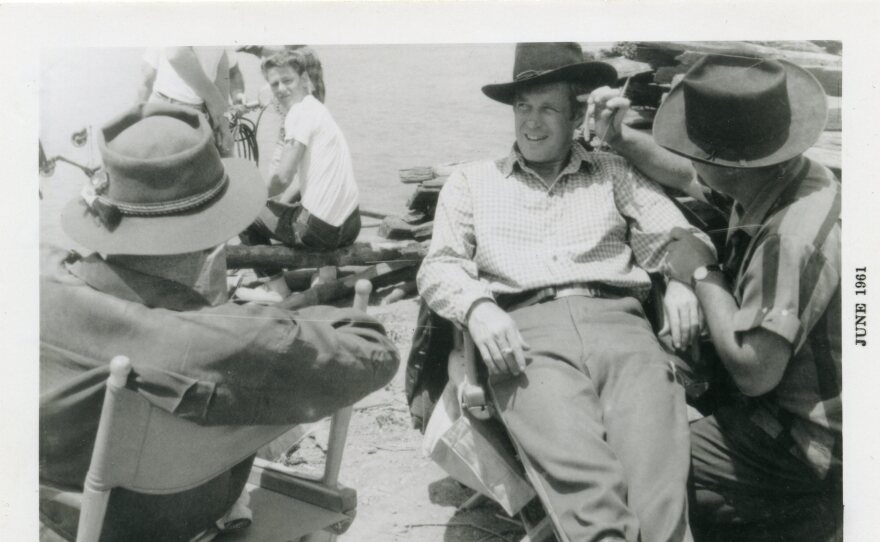
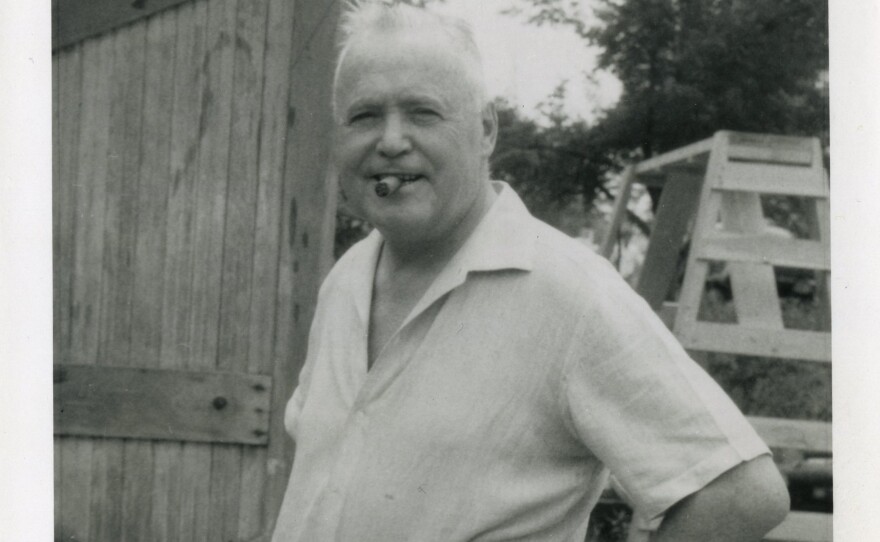
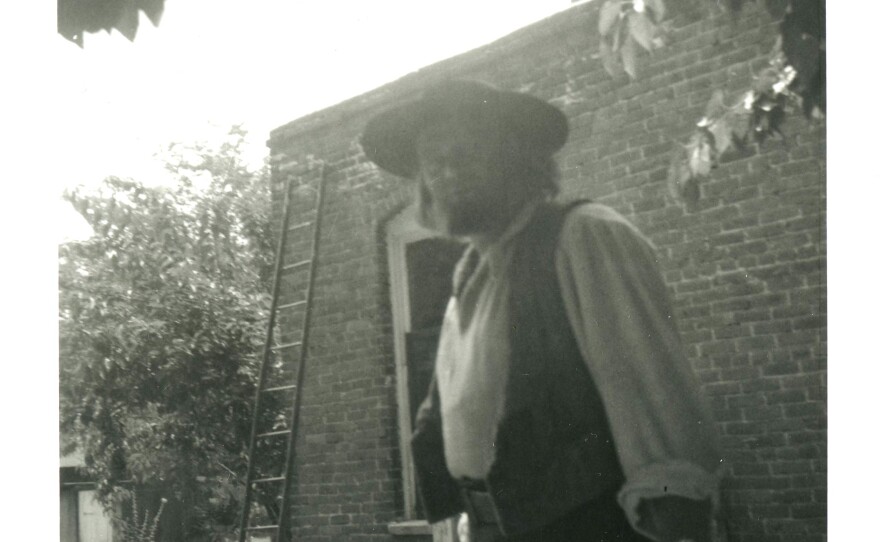
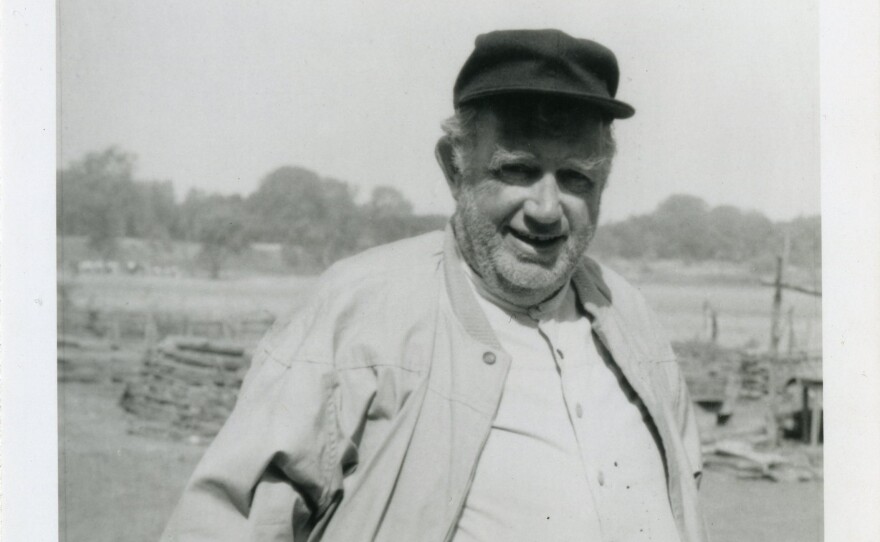
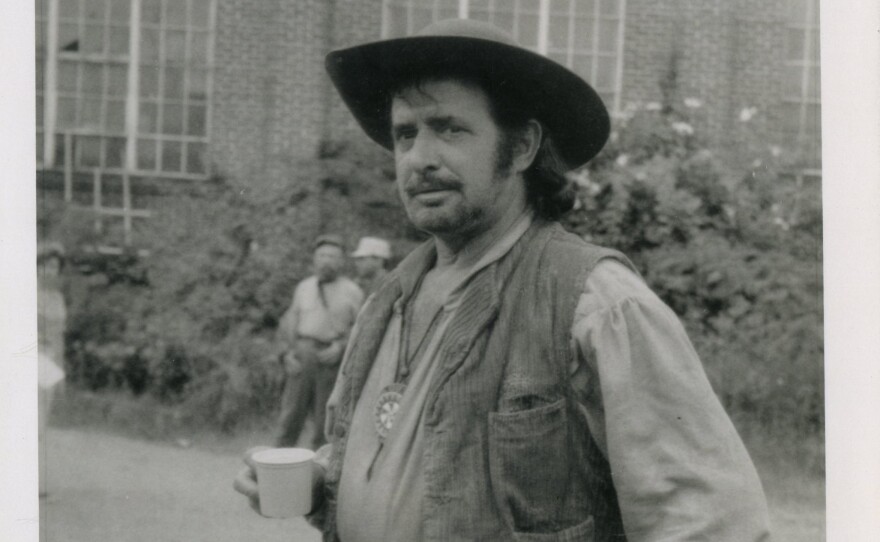
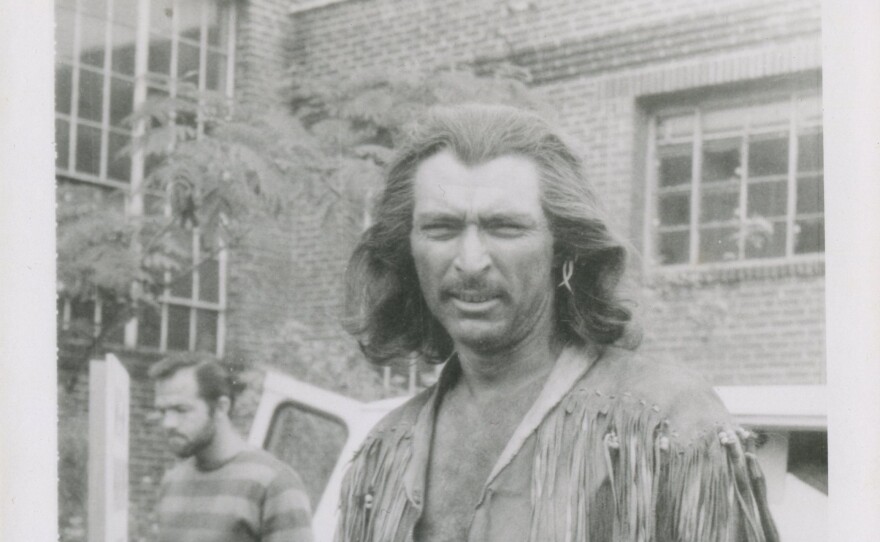
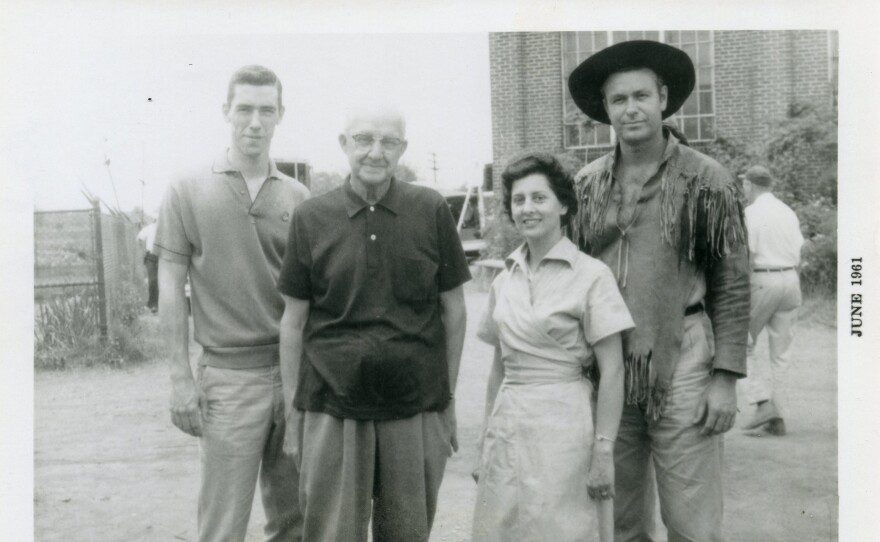
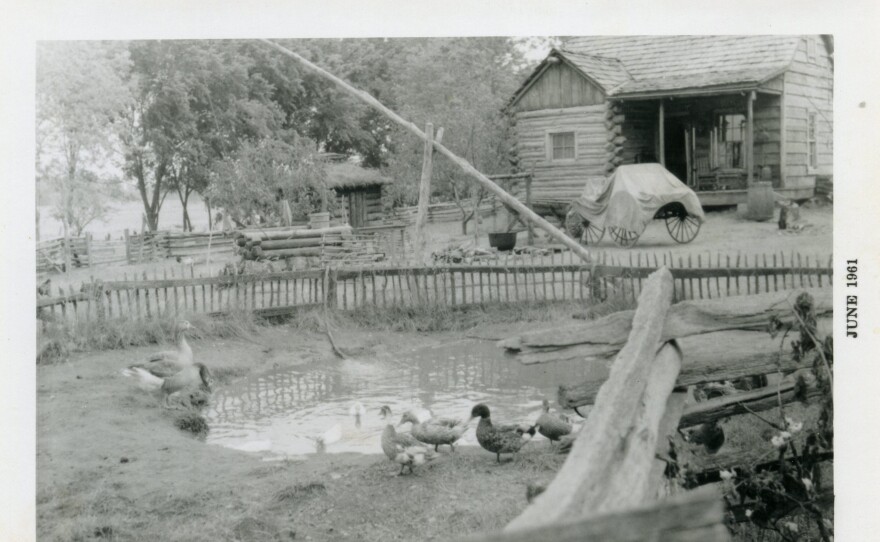
The pictures were acquired by Lamon Furniture and Antiques as part of a lot of other photographs and vintage postcards at a Marshall County auction house earlier this year. Among the stacks was an envelope of photos developed at a now closed Paducah camera shop taken by Harold Lawrence, a western Kentucky native who was working as a firefighter during the making of the film in 1961.

Inside were snapshots of Hollywood stars Jimmy Stewart, Debbie Reynolds, Lee Van Cleef and John Ford, among other candid and posed scenes from the western Kentucky production.
Joy Lamon Walden said she was overjoyed to find the photos – which she also shared on social media – because they provide a unique peek into Paducah history.
“You just don't realize how many people were involved in all that. I think it’s just kind of been lingering back there for the longest time,” Walden said. “Who would think that many stars would be in Paducah in and around the area for that length of time?”
On the back of a picture of Debbie Reynolds signing autographs at the Paducah Holiday Inn, a caption indicated that the young girl getting the actress’s signature was Susan Denise Lawrence, Harold’s daughter.
Lawrence said her father was likely working alongside the film crew during the production to ensure safety on set in his capacity as a firefighter to earn some extra money. Though it’s been decades, she said she recognizes her father’s touch in the photos.
“Dad has a good eye. He's very artistic, and … some of them look very professional, but then some of the others just like, “Well, your head got kind of chopped off,” and different things like that.”
Though she would have been just 4 years old, Susan told WKMS still remembers her mom taking her to the Holiday Inn to meet the starlet.

“I still hear [my mom] on the other side of the pool … and she was kind of shoving me, hollering, ‘Go closer, go closer, go closer,’” Susan said. “Then I remember Debbie Reynolds saying something to me and she asked me my name. And at that point I took a breath. It's like, ‘Oh, this is okay.’ I do have a very vivid memory of that instant.”
Harold Lawrence, now in his late 80s, and his daughter still live in western Kentucky.
His pictures, since being rediscovered, have been scanned and added into the McCracken County Public Library’s digital collection. The library’s Local & Family History Coordinator Nathan Lynn said the photos “speak to a very specific moment in Paducah.”
“Paducah was really – no pun intended – booming at that time [following local nuclear development in the 1950s]. You have a lot of changing, both in architecture, in transportation and dress and apparel, in the landscape of where our city was starting to expand. These photographs are great because they don't just show downtown Paducah. They show some motels, they show local citizens, along with what most people would call Hollywood superstars.”










How ‘How The West Was Won’ was done
The making of ‘How The West Was Won’ – announced in the spring of 1961 by MGM – was a bit of a media circus in far western Kentucky at the time.
A Paducah Sun-Democrat article said that MGM chose to film in the area because of its waterways and natural beauty, crediting then-Paducah Chamber of Commerce executive manager Russ Chittenden with getting the studio to film in the region.
Chittenden captured his experiences helping bring “How The West Was Won” to the area in a diary, which was later published in the Paducah Sun-Democrat. He said the shoot, ultimately, employed more than 600 locals — including actors, teamsters and craftspeople — and that it gave him a new appreciation for his neighbors and for the people who make movie magic happen.

“I rediscovered that 99 percent of the people of West Kentucky and Southern Illinois are real fine folks,” Chittenden wrote. “I discovered that a willow tree on a muddy river bank is beautiful … that Chamber of Commerce managers are not the only people who rise at dawn and toil into the night seven days a week and there are a lot of nice people with a Hollywood Box Number.”
Major Hollywood stars – including Stewart, Reynolds, Van Cleef, Carroll Baker, George Peppard, Walter Brennan, Andy Devine and others – all made camp at Paducah’s Holiday Inn for the better part of a month, with filming taking place around the region. Ford directed the portions of the film made in Smithland, with the other segments of the film helmed by Henry Hathaway.
The production drew so much attention and curiosity that the Paducah Sun-Democrat ran a column about how the news outlet planned to cover it.
“The movie-shooting is glamorous and interesting and I’m sure we could turn out something pretty big every day if we could turn loose of the courts, industrial prospects, highway accidents and the raft of other happenings we must keep up with for the benefit of those who are interested in all that is going on,” wrote news editor Bill Powell. “Please give us time; when it is all over and you collect all of the solid news, we’ll have had more in the papers about ‘How The West Was Won’ than anyone else. That’s because … it’s being filmed in our front yard.”
People from around the region flocked into western Kentucky to watch the movie being filmed, with Chittenden reporting his staff counted license plates from nearly a third of the state’s 120 counties and many from out of state being spotted in the vicinity of the Smithland sets, though he noted that summer traffic to Kentucky Lake could have also driven some of the tourism.
A Paducah Sun-Democrat article from late May 1961 recounts the story of a young Paducah boy who “traded a song” for Devine’s autograph, singing the star a rendition of “The Hucklebuck” to get his signature.
Ford’s crew filmed in the area for around a month, shooting the portion of the film set on the Ohio River in Paducah first before capturing a sequence set around Shiloh during the Civil War in Smithland, mostly along the Cumberland River. The production also features a river pirate scene filmed in southern Illinois, where they found a cave exterior between Pinckneyville and Dycusburg. Other parts of the cave sequence were produced inside the former Paducah Ice Company building off Brown Street, per the Paducah Sun-Democrat.
According to the Paducah Sun-Democrat, some 400 people from around the region show up in the film as extras.
“How The West Was Won” was also filmed in Arizona, California, Colorado, Oregon, South Dakota and Utah. The only portion directed by Ford was filmed in Smithland, with the other segments of the film helmed by Hathaway and by George Marshall.
It would ultimately be one of just two dramatic films ever made using the three-strip Cinerama process, a movie format that required three, synced up projectors to display the movie on a curved screen. The format – which was more typically used for travel documentaries – provided what American Cinematographer calls a “super-widescreen” viewing experience.
The film was a massive commercial success, grossing more than $46 million in the U.S. – more than half a billion dollars in today’s market when adjusted for inflation – on a budget of $15 million. It also earned eight Academy Award nominations, ultimately netting three Oscars (Best Writing, Story and Screenplay, Best Film Editing and Best Sound).
The film didn’t make its western Kentucky debut until more than a year after its U.S. premiere, because no movie houses in the region were equipped to show films in the Cinerama format. “How The West Was Won” finally screened for the public in downtown Paducah’s long-shuttered Arcade Theatre on March 26, 1964, after the film had been converted for standard 35mm projection. An ad in the Paducah Sun-Democrat promoted a preview screening the night before that, with free “buffalo meat hors d’oeuvres” on hand for attendees.


